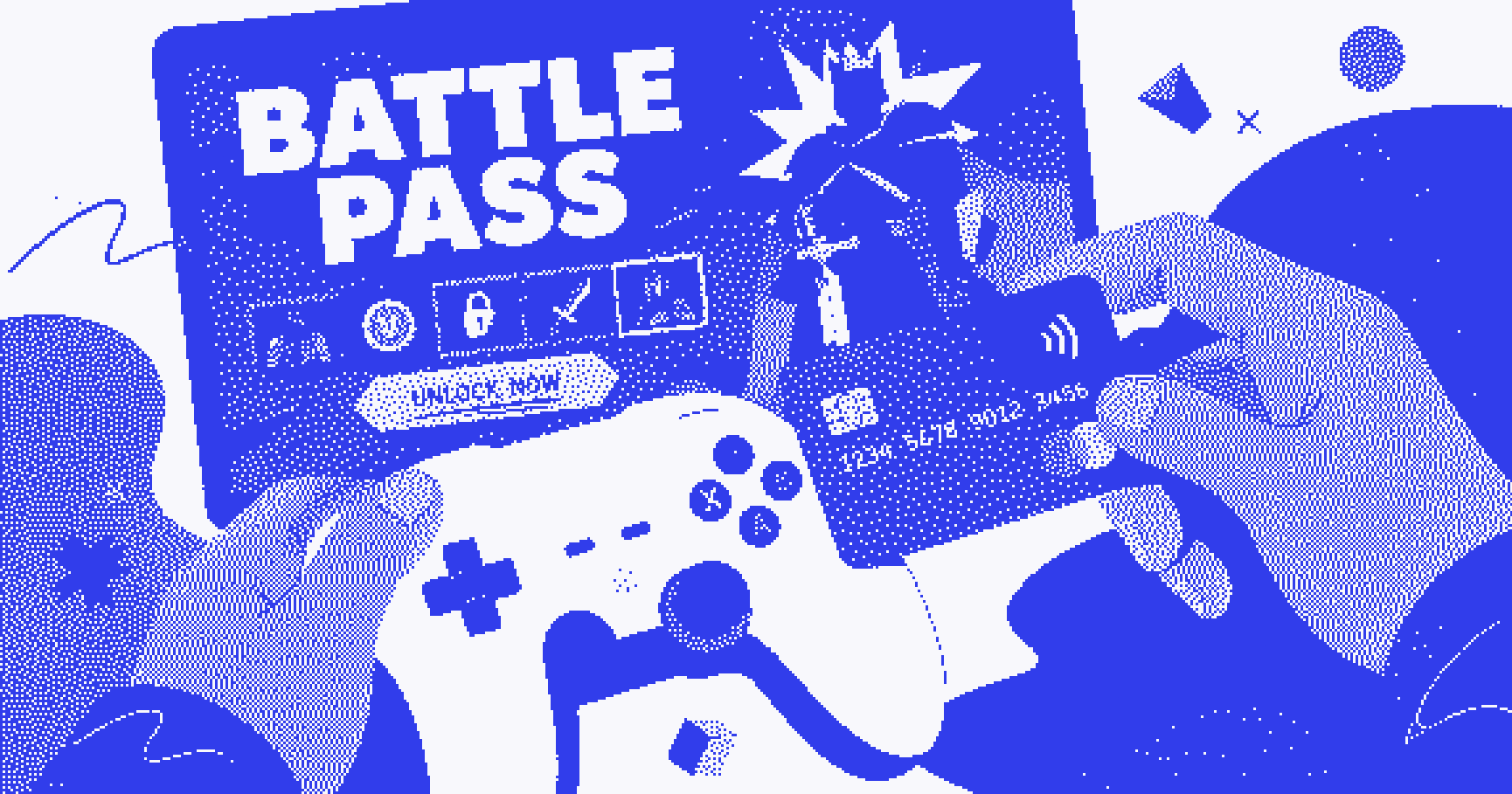
The battle pass
A season of rewards turns playtime into a progress bar—and a deadline turns that bar into a purchase decision.
What’s the product?
A battle pass is a time-limited, progression-based monetisation system usually found in free-to-play or live-service games. Players complete matches, challenges or daily tasks to advance through reward tiers; a paid pass commonly unlocks an additional premium reward track alongside the free one.
How does it work?
The system combines a visible ladder with a season clock. Play creates progress, progress reveals rewards, and the premium track makes the next tier feel more valuable because it contains cosmetics, currency or other limited items. A good pass turns routine play into a clear set of short-term goals; a bad one turns leisure into a checklist that expires before the player is ready.
What’s the mechanic?
The battle pass bundles competence, collection and loss avoidance. A progress bar makes effort measurable; tier rewards turn completion into a sequence of small wins; a deadline makes unfinished progress feel costly to abandon. It is a retention system because the player has both a reason to return today and a reason to keep returning before the season closes.
Examples
Fortnite popularised the modern seasonal battle-pass model for a mass audience, using cosmetics and a visible tier system. Apex Legends uses seasonal passes to connect regular play with themed rewards. Fall Guys adapts the structure to a lighter social game, where costumes and event tracks make participation itself part of the spectacle.
A battle pass can make a live game feel generous by rewarding committed play, but it can also make rest feel like forfeiture. The boundary between a motivating goal and manufactured urgency is set by how much time is demanded, how clearly the rules are communicated and whether missing a reward undermines the player’s enjoyment.